 Physiotherapy
 Nursing
 Medical Equipment
 Trained Attendants
 Lab Tests
 Elder Care
 Doctor Consultation
 Mother & Baby Care
 Diabetes Care
 Critical Care
 Covid Care
 Vaccination
 Counselling
 Nutrition & Diet Consultation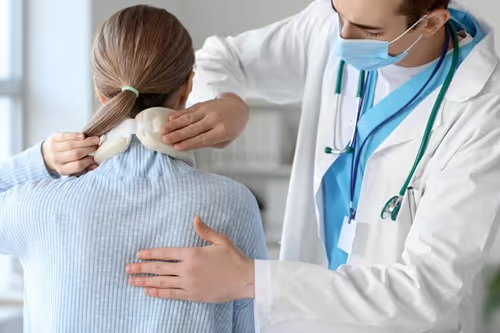
Hi,
I am a premium package member ( patient name: Nikhat Begum)
I just wanted to thank the customer support team. Especially Partha Sarthy, he has been extremely helpful and prompt in solving my concerns. I am very happy about how he went out of his way to make things happen in a timely manner and followed up post-resolution.
- 4.8On Google
- Background-verified professionals
Expert Physiotherapy at Home
Certified physiotherapists visit you at home to provide focused, one-on-one care tailored to your needs. With no travel or waiting rooms, recovery happens in a setting that is comfortable, familiar, and built around your convenience.
Personalised Recovery Programmes
Every treatment plan is designed to suit your condition, goals, and pace. Our physiotherapists follow structured, evolving protocols to ensure consistent progress, with each session aligned to deliver meaningful results.
Trusted Physiotherapists. Real Results.
Our team comprises experienced, background-verified physiotherapists trusted by thousands of families. With a strong focus on safety, reliability, and clinical outcomes, we make recovery at home both effective and reassuring
Patient Testimonials
Real experiences from the families we care for
To whom this letter of recommendation may concern.
Dear Sir,
I would like to share our very positive feedback concerning your business partner Vinay Venugopal.
He has been nothing but diligent and efficient in organising PCR tests for the whole family on behalf of Portea. And this several times being particularly proactive in paving the way through the registration and payment processes of the company, smoothing the way out for us right form the start until we received our results.
Kindly take this recommendation as a priority as Vinay Venugopal is certainly an added value to any company he would offer his services to.
Not to mention being able to communicate in English with him really took the stress off the whole medical process, which can certainly not be said for other laboratory partners.
This is one of the reasons we will carry on giving our business to Portea.
Best regards,
Johanna SALVADO and Family
The physiotherapist behaved professionally and the service was good. Call center executives were also good at addressing my concerns Thank you Santosh You have honestly done your job here. I got the account into my account
Hello Mr. Parthasarathi,
I am very much delighted to thank you for your immediate response to sort out the problem and difficulty I was facing to get the Blood test reports due to some problem. First the reports sent to me were incomplete.
Then you come into this picture and you are able to listen carefully to the problems I was facing from morning.
With your personal efforts I was able to get the full and Complete Email blood reports.
Thank you for your timely help.
Best wishes.”I, Raghav Pant got tested positive for COVID 19 on the 19th of April. Post that I was admitted to the hospital for continuous dip in my saturation / oxygen levels. I was admitted for 9-10 days where I underwent treatment.
During the course of my treatment in the hospital I was introduced to Dr. Neeraj (Physiotherapist), with whom I had few physiotherapy sessions in the hospital. Dr. Neeraj is a highly professional doctor, he not only understood the need of the hour i.e. my treatment but also counselled and motivated me to get better , something I believe was more important than anything else at that time.
Through Portea I was fortunate enough to get Dr. Neeraj as my physiotherapist once I got discharged from the hospital. Both my mother and myself took 5 days of session with the Doctor and after 5 days our saturation level peaked to 97/98, all thanks to the dedication , motivation provided by Dr. Neeraj to my mother and myself who have now completely recovered.
I would like to take this opportunity to thank Portea and Dr. Neeraj for helping us in our road to recovery post COVID 19.
Thank you
Raghav PantDear Portea,
My dad really likes the physiotherapist. It’s made a big difference to his walk and well-being already.
Many thanks for this.Kavitha Buggana
I got my bloodwork done at Portea. The whole process was smooth and professional. My appointment was booked for 12 noon and the person came by 11:55am. They sanitized themselves and all the equipment was new and sealed. The blood draw was painless and fast. The whole process lasted just 5 mins. The next morning I received all my bloodwork via email. This is the most convenient and high quality experience of blood diagnostics I’ve had. Highly recommend to anybody and everybody! I will never visit a clinic for this again.
I had a very good experience with (Magimai rani) who visited our house and helped us.Thanks..!
Rakesh was excellent with the service and he was able to diagnose the problem very soon and gave the right treatment.
I was feeling better just after one session. Highly recommend him!Dr. Ritu was very helpful for my recovery post surgery. She has done a lot of effort to make me feel relaxed as well as energetic at the same time. After her session I am back to my job now. Thanks.
Portea Physiotherapists for Home Visits
Meet some of our experienced and dedicated healthcare professionals
![Hirak Subhra Chatterjee - Physiotherapist at Portea Medical]()
Hirak Subhra Chatterjee
Physiotherapist
18+ yrs experience
- Orthopedic
- Musculoskeletal
- Sports rehab
- +6 more
![V Saravanakumar - Physiotherapist at Portea Medical]()
V Saravanakumar
Physiotherapist
15+ yrs experience
- Adult Neurology
![Sabyasachi Ghosh - Physiotherapist at Portea Medical]()
Sabyasachi Ghosh
Physiotherapist
BPT · MPT·12+ yrs experience
- Orthopedic
- Musculoskeletal
- Exercise Physiology
- +2 more
![Prakash Vadivel - Physiotherapist at Portea Medical]()
Prakash Vadivel
Physiotherapist
12+ yrs experience
- Adult Neurology
![Nidhi Bhalla - Physiotherapist at Portea Medical]()
Nidhi Bhalla
Physiotherapist
BPT·10+ yrs experience
- Adult Neurology
- Paediatric Neurology
![Arnab Das - Physiotherapist at Portea Medical]()
Arnab Das
Physiotherapist
10+ yrs experience
- Orthopedic
- Musculoskeletal
- Adult Neurology


Your journey to a pain-free future starts here
Personalised Physiotherapy at Home
Flat 10% Off on booking packages
Book Now*T&C apply


Introduction
Torticollis, commonly known as “wry neck,” is a condition characterized by abnormal, involuntary tilting or rotation of the head due to muscle contractions in the neck. It can be congenital (present at birth) or acquired due to injury, muscle spasms, or neurological disorders. Torticollis rehabilitation focuses on restoring neck mobility, reducing pain, and improving posture through targeted treatments and therapies.
Causes of Torticollis
Torticollis can have various underlying causes, which influence the rehabilitation approach:
- Congenital Torticollis: This condition is often caused by the shortening or tightening of the sternocleidomastoid muscle in newborns, leading to restricted movement and abnormal head positioning. It may be linked to the baby’s position in the womb or birth trauma.
- Acquired Torticollis: This can develop later in life due to muscle strain, infections, trauma, or prolonged poor posture. Certain activities, such as prolonged desk work or using mobile devices incorrectly, can contribute to muscle imbalance and stiffness in the neck.
- Spasmodic Torticollis (Cervical Dystonia): A neurological disorder that causes involuntary muscle contractions, leading to painful, abnormal head postures. This condition is often chronic and may worsen over time if left untreated.
- Other Causes: Infections, inflammation, or even certain medications can trigger torticollis by affecting the nervous system or muscles in the neck.
Symptoms and Diagnosis
Common symptoms of torticollis include:
- Head tilting to one side with limited range of motion
- Neck pain and stiffness
- Muscle tightness and spasms
- Headaches or dizziness
- Shoulder elevation on the affected side
- Fatigue due to continuous muscle strain
- Difficulty maintaining an upright posture
Diagnosis typically involves a physical examination, medical history evaluation, and imaging tests like X-rays, MRIs, or CT scans to determine the cause and severity of the condition. Electromyography (EMG) may also be used to assess muscle activity and nerve function.
Non-Surgical Rehabilitation Approaches
1. Physical Therapy for Torticollis
Physical therapy is a cornerstone of torticollis rehabilitation, providing targeted exercises and hands-on techniques to improve mobility and function. Some key components include:
- Stretching Exercises: Gentle, sustained stretches help lengthen tight muscles and gradually restore normal range of motion. These exercises should be performed regularly for optimal results.
- Strengthening Exercises: Weak muscles contribute to poor head positioning. Strengthening exercises target the neck, shoulders, and upper back to provide better support and alignment.
- Manual Therapy: Hands-on techniques, such as myofascial release, joint mobilization, and trigger point therapy, can alleviate stiffness and reduce pain.
- Postural Training: Teaching patients to maintain proper alignment while sitting, standing, and sleeping prevents muscle imbalances and reduces strain on the neck.
- Heat and Cold Therapy: Heat application can relax tight muscles, while cold therapy helps reduce inflammation and pain, especially in acute cases.
- Kinesiology Taping: Some physical therapists use specialized taping techniques to provide additional support and facilitate correct muscle function.
2. Medications for Symptom Relief
Certain medications may be prescribed to manage symptoms and improve comfort:
- Muscle Relaxants: These help alleviate muscle stiffness and spasms.
- Pain Relievers: Nonsteroidal anti-inflammatory drugs (NSAIDs) like ibuprofen or acetaminophen can help reduce discomfort.
- Botulinum Toxin (Botox) Injections: These are commonly used for spasmodic torticollis to temporarily paralyze overactive muscles, providing significant relief from involuntary contractions.
3. Bracing and Orthotic Support
For some patients, soft cervical collars or braces can help maintain proper head positioning and provide additional support. This is particularly useful for infants with congenital torticollis, as early intervention can prevent long-term complications.
Advanced Treatment Options
If conservative treatments do not provide sufficient relief, advanced interventions may be considered.
1. Neuromodulation Therapy
- Electrical stimulation techniques may be used to retrain muscle function and reduce abnormal contractions.
- Deep brain stimulation (DBS) is an option for severe cases of cervical dystonia, where electrodes are implanted to regulate muscle activity.
2. Surgical Intervention
Surgery is rarely required but may be considered in severe or persistent cases that do not respond to other treatments. Common surgical options include:
- Sternocleidomastoid Release Surgery: This procedure involves lengthening the muscle to restore proper movement and reduce head tilt.
- Selective Nerve or Muscle Procedures: In cases of severe spasmodic torticollis, selective nerves or muscle groups may be cut to relieve chronic contractions and pain.
- Spinal Fusion or Decompression: In rare cases, when torticollis is linked to structural abnormalities in the spine, corrective spinal surgery may be necessary.
Home-Based Exercises and Lifestyle Modifications
Patients can support their rehabilitation through consistent home-based exercises and lifestyle modifications:
- Daily Stretching Routines: Simple neck stretches help maintain flexibility and prevent stiffness.
- Workplace Ergonomics: Adjusting desk height, using supportive chairs, and taking breaks from screen time can prevent poor posture from contributing to symptoms.
- Stress Management Techniques: Practices such as deep breathing, yoga, and mindfulness meditation can reduce tension and help manage pain.
- Supportive Sleeping Positions: Using a contoured pillow and maintaining proper head positioning while sleeping can alleviate strain on the neck.
- Hydration and Nutrition: Staying hydrated and ensuring proper nutrient intake, including magnesium and vitamin D, can support muscle function and recovery.
How Portea Supports Torticollis Rehabilitation
At Portea, we provide expert physiotherapy services tailored to individuals with torticollis. Our rehabilitation programs focus on pain relief, improved mobility, and long-term management strategies. Beyond torticollis treatment, we specialize in a range of physiotherapy services, including post-surgical rehabilitation, arthritis care, neuro-rehabilitation, sports injury recovery, orthopedic care, elderly physiotherapy, and respiratory therapy—all delivered at home for maximum convenience. With our dedicated and experienced team, we ensure that each patient receives professional, customized care to enhance their recovery and improve their quality of life.
FAQs
1.What treatments are used for torticollis?
Treatments include stretching exercises, physical therapy, manual techniques, and postural corrections. In severe cases, Botox injections or surgery may be recommended. Therapy focuses on relieving muscle tightness, enhancing flexibility, and restoring normal neck movement, ensuring long-term relief and functional improvement.
2.Who needs torticollis treatment?
Torticollis treatment benefits infants with congenital torticollis and adults with acquired torticollis from injury, poor posture, or muscle spasms. Early intervention helps prevent complications, improves mobility, and reduces discomfort. A customized rehabilitation plan ensures effective recovery based on age, severity, and individual needs.
3.How long does torticollis rehabilitation take?
Recovery time varies based on severity and consistency of treatment. Mild cases may improve within weeks, while severe cases can take months. Regular therapy sessions, home exercises, and posture adjustments help accelerate progress and ensure lasting improvements in neck mobility and comfort.
4.Can torticollis be treated at home?
Mild torticollis can be managed with guided exercises, stretches, and posture corrections at home. However, professional therapy ensures proper techniques and faster recovery. Severe cases require expert intervention for effective treatment and to prevent long-term complications like restricted movement or chronic pain.
5.Is torticollis rehabilitation painful?
Therapy is usually gentle, but mild discomfort may occur as muscles stretch and adjust. Therapists use pain-relief techniques like massage and gradual stretching to minimize discomfort. Consistent therapy helps strengthen muscles, improve flexibility, and reduce stiffness over time.
Portea Services
Elder Care
Trained Attendant
Physiotherapy
Critical Care
Medical Equipment
Nursing
Doctor Consultation
Mother & Baby Care
Lab Tests
Speciality Pharma
- > Our Team> Blogs> Doctor Speak> Press & Media> Investor Relations> Annual Return> Careers> Partner With Us> Contact Us> FAQs> Testimonials
- > Physiotherapy> Doctor Consultations> Nursing> Medical Equipment> Trained Attendants> Lab Tests> Counselling
- > Physiotherapy for Back Pain> Physiotherapy for sports> Eldercare for Parents> Injections and IVs> Cholesterol tests> Refer a friend
For Bookings and Service queries:
Ph: 1800 121 2323 Email: bookings@portea.comFor Customer Support & Feedback:
Ph: 1800 121 2323 Email:customersupport@portea.com![Facebook]()
![Twitter]()
![Youtube]()
![Instagram]()
![LinkedIn]()


*I agree to be contacted by Portea over phone and email. I do not have any objection to receiving emails, messages (SMS or any other mode) and calls from Portea. This consent shall supersede any preferences set through Do Not Disturb (DND Register)/ National Customer Preference Register (NCPR).
Privacy Policy | Terms and Conditions | Patient Rights & Responsibilities© 2026 Healthvista India Private Limited. All rights reserved.
Portea™ is a brand of Healthvista India Private Limited · CIN: U85300KA2013PTC069291